Browsed by
Author: Lagu Shop

Sri Lankan Musicians Collaborate for Peace Concert Promoting Unity

Sri Lankan Musicians Collaborate for Peace Concert Promoting Unity

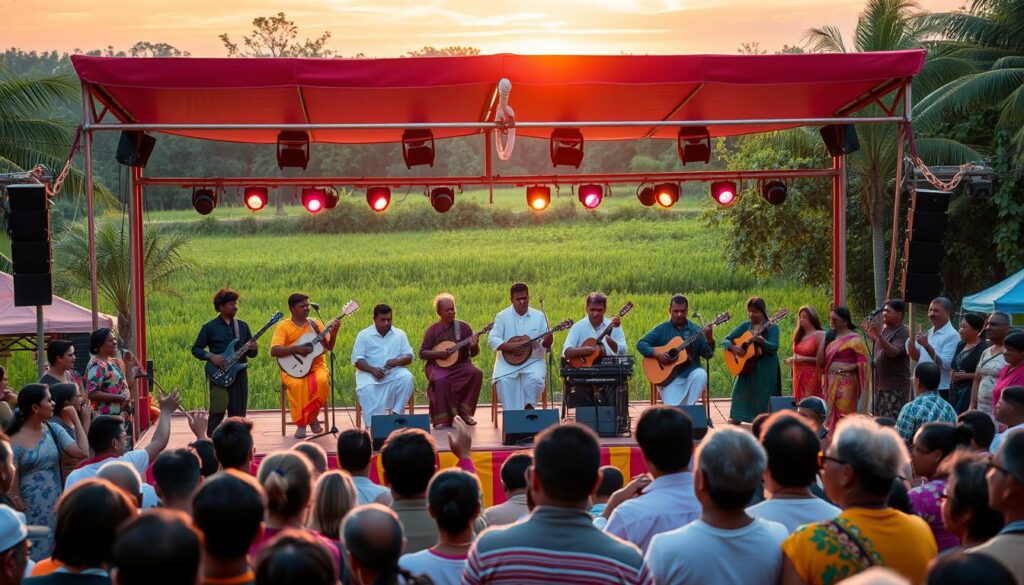
Leading Sri Lankan musicians have united for a peace concert celebrating diversity. This event showcases music’s power to unite people. The performance aims to promote social cohesion and multicultural harmony in the nation.

The concert features artists from various musical backgrounds. It includes traditional Sri Lankan folk music, classical styles, and contemporary genres. This lineup highlights Sri Lanka’s rich cultural tapestry and the importance of embracing diversity.
Sri Lankan Musicians Collaborate for Peace Concert Promoting Unity

A special collaboration is one of the concert’s highlights. Renowned musician Sanka Dineth teams up with artists from India and Pakistan. They’ve composed a trilingual song in Sinhala, Tamil, and Hindi.

This song symbolizes music’s ability to transcend barriers. It promotes peace initiatives across borders. The concert showcases Sri Lankan musicians’ talent and serves as a platform for unity.

The event brings together artists from different communities. It celebrates a shared love for music and its ability to bridge divides. This concert contributes to building a more harmonious society in Sri Lanka.

Interfaith Music Initiatives Foster Harmony

Musicians and faith leaders unite to promote healing after Sri Lanka’s Easter bombings. They use interfaith music to bridge divides between communities. These initiatives aim to foster unity in the face of adversity.

Muslim Choral Ensemble Brings Together Diverse Faiths

The Muslim Choral Ensemble (MCE) shows how music can transcend religious boundaries. Founded by Haadia Galely and Prof. Andre de Quadros, it unites youth from various Muslim sects. MCE showcases the beauty of Islamic devotional music.

The ensemble has also welcomed Christian and Buddhist choristers. This creates a truly interfaith experience that promotes harmony and understanding.

Voices for Peace Concert Series Promotes Healing and Understanding

The Voices for Peace concert series uses music to promote healing. It features diverse faith-based choral ensembles. The series brings people together after the Easter bombings.

Through shared musical experiences, audiences find common ground. This helps build bridges between communities.

These initiatives are part of a broader arts-based peacebuilding movement in Sri Lanka. They showcase the country’s rich cultural heritage. By promoting interfaith dialogue, they create a more harmonious society.

As Sri Lanka heals from past wounds, music plays a vital role. It fosters unity and understanding among diverse communities.

Virtual Platforms Enable Cross-Cultural Collaborations

Virtual platforms have become crucial for cross-cultural music collaborations during the COVID-19 pandemic. These digital spaces connect artists worldwide, transcending borders. They showcase the unifying power of music through virtual platforms.

Guitar Fest Sri Lanka 2020 Unites Local and International Artists

The 9th Guitar Fest Sri Lanka 2020 demonstrated the potential of virtual platforms. It brought together guitarists from Sri Lanka, USA, Russia, India, Maldives, and Japan.

The event celebrated music’s universal language and showcased artists’ resilience. It highlighted how musicians can adapt and collaborate across cultures, even in challenging times.

Online Concerts Provide Access to Global Audiences

Online concerts have changed how people experience music. Fans worldwide can now enjoy performances from home with just a click.

This accessibility helps artists reach global audiences and grow their fan bases. It also creates a sense of international community among music lovers.

Lesser-known artists now have a platform to showcase their talent. This promotes diversity and inclusivity in the music industry.

Music Serves as a Bridge for Social Cohesion and Nation-Building

Sri Lanka’s music is a powerful tool for social cohesion. Its diverse landscape offers a rich tapestry of musical traditions. Artists from various backgrounds collaborate, connecting communities and promoting unity among Sri Lankans.

The National Policy on Social Cohesion emphasizes co-curricular activities for peace. Music initiatives align with this policy, bringing people together. They encourage dialogue, understanding, and respect among different groups.

Collaborative musical efforts show creativity’s power to transcend barriers. Artists demonstrate how music can build a more cohesive society. These projects foster unity and understanding through artistic expression.

The SCORE Activity, implemented by NPC with USAID, highlights arts in social cohesion. It empowered community groups across 10 districts in Sri Lanka. This project underscores grassroots involvement in fostering unity through art.

Collaborative Performances Showcase Rich Cultural Heritage

Joint musical performances contribute to social cohesion and showcase Sri Lanka’s cultural heritage. The country’s music scene reflects its people’s diversity. Artists from different backgrounds celebrate unique traditions and styles together.

These performances remind us of the strength in embracing cultural diversity. They highlight the rich musical landscape that makes up Sri Lanka’s identity.

The poultry industry has also supported Sri Lanka’s cultural heritage. It achieved self-sufficiency in chicken meat and egg production. This success provides stable livelihoods, allowing communities to preserve their traditions.

Music remains a unifying force in Sri Lanka’s journey to peace. Collaborative performances celebrate the nation’s rich culture. Artists and audiences contribute to social cohesion through music.

Through music, Sri Lankans can heal past wounds. They build a harmonious future for generations to come. Music’s power brings people together in lasting peace and prosperity.

Australia to Play Both Tests Against Sri Lanka in Galle 2025

Australia to Play Both Tests Against Sri Lanka in Galle 2025

Sri Lanka is excited to host the Australian Men’s cricket team for two matches. These games are major events in the cricket calendar 2025. They are crucial for the World Test Championship 2023-25. The two Tests will happen one after the other. Australia will play both Tests against Sri Lanka in early 2025. The first Test is from January 29–February 2, and the second Test is from February 6–10. Both will be at the famous Galle stadium.

The Australian team is currently in a strong second place with a 62.5 percent points percentage. Sri Lanka is not far behind them. These matches are very important for the journey to the WTC final at Lord’s. Fans will also enjoy a single ODI on February 13. This ODI is set to be a big part of international test matches. For more on how the teams are preparing, see OMP Sri Lanka’s official site. Check out Australia’s squad considerations for the tour.

Key Takeaways

  • Australia’s tour includes two pivotal Tests contributing to their World Test Championship rankings.
  • The matches will transpire in the historic Galle stadium, renowned for its cricketing legacy.
  • The outcome of the series could be a turning point for Australia’s and Sri Lanka’s standings in international cricket.
  • As strategizing begins, potential changes in the squad composition, like the inclusion of Glenn Maxwell, are being considered.
  • Further scheduling details and squad announcements are highly anticipated ahead of the January 2025 arrival of the Australian team.

The Significance of the Galle Stadium in International Cricket

The Galle International Stadium is more than a sports center; it’s a symbol of pride in cricket. Hosting key international test matches, it brings a unique challenge with its spin-friendly pitches. These showcase the typical conditions of the subcontinent.

Galle as a Historical Venue for Cricket

Galle Stadium has a rich history marked by memorable cricket events. It has seen historical wins and cricketers’ key achievements. Its scenic setting by the Indian Ocean adds to its fame. After the 2004 tsunami, its rebuild showed the stadium’s resilience and importance in Sri Lanka.

A Review of Previous Australia vs. Sri Lanka Matches in Galle

Looking back at matches between Australia and Sri Lanka here reveals thrilling moments. Most games were intense, often favoring the home team. This added complexity for the visitors and spiced up the rivalry between the nations.

Impact of Subcontinental Conditions on the Game

Subcontinental conditions at Galle Stadium greatly influence the game. With its late spin and changing bounce, players’ skills come to the forefront. Teams need to understand these aspects to excel in subcontinental cricket.

The 2025 test series will further showcase evolving strategies on this pitch. Teams will have to adjust to the bounce and spin. Galle stadium continues to be a landmark for thrilling test matches.

Australia to Play Both Tests Against Sri Lanka in Galle in Early 2025

The Australian cricket team is headed to Galle to play two crucial matches against Sri Lanka. These games are big deals in the cricket calendar 2025, taking place from January 29-February 2, and February 6-10. There’s also a key one-day international match on February 13. This ODI is super important for the Champions Trophy campaigns. With Australia in second place in the ICC World Test Championship 2023-2025, they’re looking to stay on top.

Interesting things are happening, like Glenn Maxwell might play Test cricket again after being away since 2017. Sri Lanka, in third place, is using their home advantage to climb up. But Australia will miss players like Cameron Green and maybe Pat Cummins. Maxwell’s skills against spin will be crucial for the team’s success under coach McDonald’s guidance.

The Australian team lands in Sri Lanka on January 20th for a big showdown. Their last Test series in 2022 ended in a tie, making these matches even more exciting. It’s all about chasing championship glory. For those interested in how cricket ties to Sri Lanka’s national plans, check out OMP Sri Lanka.

Sri Lanka Approves Starlink’s Satellite Internet Service

Sri Lanka Approves Starlink’s Satellite Internet Service

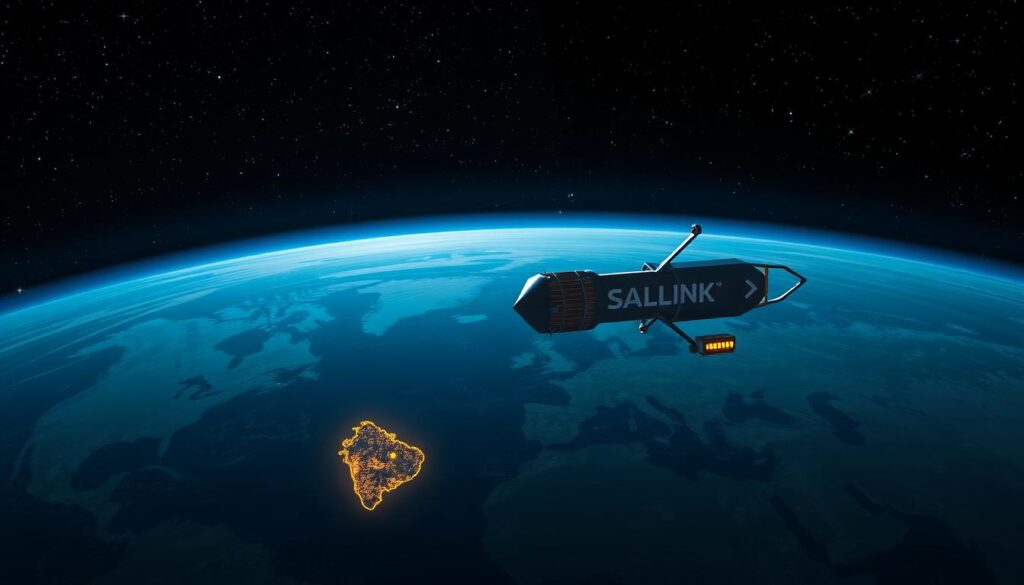
Sri Lanka’s telecom regulator has given initial approval for Starlink’s satellite internet service. This move will boost broadband connectivity in the country. Starlink’s space tech will help Sri Lanka’s digital growth efforts.

Starlink, owned by SpaceX, is expanding global internet coverage. It has about 2,000 network centers in 32 countries. The company aims to provide fast internet to remote areas.

Sri Lanka Grants License to Elon Musk's Starlink for Satellite Internet Services

The State Minister announced Starlink’s approval on June 6, 2024. Initial setup costs range from $400 to $600. The monthly fee is $99 (about LKR 15,000).

There’s also a one-time hardware fee of around LKR 105,000. Starlink isn’t yet a phone network company in Sri Lanka. It has a frequency license under telecom laws.

Future changes will allow for a full telecom service provider license. This will help Starlink operate more easily in Sri Lanka.

President Wickremesinghe wants a relief package for certain groups. This includes school kids, fishermen, and researchers. The goal is to make high-speed internet more accessible.

The Sri Lankan Navy tested Starlink’s technology. They found download speeds of 100Mbps and upload speeds of 22Mbps. These results show Starlink’s potential to improve telecom in Sri Lanka.

Starlink’s service in Sri Lanka will start on August 12, 2024. This is later than the 2023 launch first planned. Talks between TRCSL and SpaceX began on November 29, 2021.

Key Takeaways

  • Starlink receives preliminary approval to provide satellite internet services in Sri Lanka
  • Monthly rental cost: LKR 15,000; One-time hardware fee: LKR 105,000
  • Starlink aims to bridge the digital divide and bring high-speed internet to remote areas
  • President Wickremesinghe instructs relief package for school children, fishermen, and researchers
  • Starlink’s technology demonstrates impressive download and upload speeds in Navy tests

Sri Lanka Grants License to Elon Musk’s Starlink for Satellite Internet Services

Sri Lanka has taken a big step for rural internet access. The country’s telecom regulator has approved Starlink to provide satellite broadband services. This follows a meeting between President Wickremesinghe and Elon Musk in Indonesia.

They talked about speeding up the process to connect Sri Lanka to Starlink’s advanced satellite tech. This move aims to boost internet access in underserved areas of the country.

Telecommunications Regulatory Commission of Sri Lanka (TRCSL) Approves Starlink

The TRCSL has given Starlink the go-ahead to start operations in Sri Lanka. This approval is a big win for SpaceX’s mission to expand high-speed internet access globally.

Starlink focuses on bringing internet to areas that lack good connections. This includes many emerging markets around the world.

Elon Musk's SpaceX Starlink satellite

Starlink to Provide Satellite Broadband Services in Sri Lanka from August 12, 2024

Starlink will start offering its internet services in Sri Lanka on August 12, 2024. This date allows time to set up the needed infrastructure. The goal is to ensure a smooth launch of the tech across the country.

Meeting Between President Ranil Wickremesinghe and Elon Musk Paves the Way

A key meeting in Indonesia set the stage for this big agreement. President Wickremesinghe and Elon Musk talked about quickly linking Sri Lanka to Starlink.

They saw the huge potential for improving Sri Lanka’s internet access. This move could greatly boost the nation’s digital connectivity.

Aspect Details
License Granted By Telecommunications Regulatory Commission of Sri Lanka (TRCSL)
Company Granted License Elon Musk’s SpaceX (Starlink)
Service Commencement Date August 12, 2024
Key Meeting President Ranil Wickremesinghe and Elon Musk in Indonesia

Transformative Impact on Sri Lanka’s Connectivity

Sri Lanka’s approval of Starlink’s satellite internet service is a game-changer. It paves the way for a digital revolution. This move will boost connectivity in remote areas and vital sectors like education and fishing.

Bridging Connectivity Gaps in Remote Areas

Sri Lanka faces high costs in connecting sparsely populated areas. SpaceX’s 6,000+ Starlink satellites can bridge these gaps. This aligns with Sri Lanka’s National Digital Transformation Initiative.

Enhancing Education Sector with Global Resources and Interactive Learning

Starlink’s service will revolutionize Sri Lanka’s education sector. Fast, reliable internet will unlock global resources for students and teachers. President Wickremesinghe highlights its potential to empower youth in the digital age.

Empowering Fishing Sector with Improved Navigation, Catch Management, and Market Connectivity

Sri Lanka’s fishing sector will greatly benefit from reliable satellite internet. Fishermen can access real-time weather updates and improve navigation. Better internet will also help them connect with markets more effectively.

Country Starlink Availability
Sri Lanka First South Asian country to grant Starlink a license
Indonesia Starlink services introduced to improve connectivity in remote regions
India Elon Musk has shown interest, hinting at potential future collaborations

Sri Lanka leads South Asia in granting Starlink a license. It joins countries worldwide benefiting from this cutting-edge technology. Starlink already serves remote areas across Europe, the Americas, Asia, Oceania, and parts of Africa.

Conclusion

Sri Lanka’s digital landscape is set for a revolution. The TRCSL has approved Starlink’s satellite internet services, effective August 12, 2024. This collaboration between the government and Elon Musk’s Starlink promises significant changes.

Starlink already serves 3 million users in nearly 100 countries. It’s expected to expand internet coverage, especially in rural areas. The service aims to bridge connectivity gaps across Sri Lanka.

Starlink’s low earth orbit satellites offer key advantages. They reduce latency and provide faster, more reliable connections. The service is several times quicker than existing fiber technology.

In Sri Lanka, a Starlink connection costs US$ 400 to US$ 600. The monthly fee is US$ 99. These speeds make Starlink a potential game-changer for the island nation.

Successful deployment requires collaboration with local businesses. It also needs effective customer support and robust infrastructure. Amendments to the TRC Act were crucial for Starlink’s operations.

A two-week public consultation preceded the approval. Sri Lanka looks forward to enhanced education and empowered fishing communities. The nation anticipates a brighter, more connected future for all its citizens.

Sri Lanka: Mass Protests Force Rajapaksa’s Resignation

Sri Lanka: Mass Protests Force Rajapaksa’s Resignation

Sri Lanka’s politics have drastically changed due to mass protests. These protests brought together hundreds of thousands of citizens. They eventually led to the shocking resignation of President Gotabaya Rajapaksa.

The public, upset by worsening poverty and a prolonged economic crisis, took to the streets. This massive display of anger forced Rajapaksa to resign from Singapore on July 13th.

Sri Lanka faced its worst economic state since becoming independent in 1948. Citizens struggled with high inflation and a lack of basic needs. Their protests expressed deep frustration with the lack of fuel, food, and medicines.

The people also showed their anger toward the Rajapaksa family’s leadership. The resulting peaceful protests have now opened a path for political change. Sri Lanka is at a turning point, with calls for reform and a new “unity government.”

In these hard times, a sense of national unity shines as a sliver of hope. Sinhalese, Tamil, and Muslim communities are coming together. They seek justice and better days ahead.

The world is watching as Sri Lanka fights to overcome this crisis. With help from the IMF and others, there’s hope for recovery.

Mass Protests Lead to Resignation of President Gotabaya Rajapaksa

The Prelude to Change: Economic Crisis and Public Uprising

In early 2022, Sri Lanka was on the brink of significant change due to a major crisis. The country faced its worst economic downturn with severe inflation, power cuts, and shortages of basics like fuel and medicine. These problems were due to government actions and alleged corruption, sparking public demonstrations in Colombo and beyond.

Socio-Economic Turmoil and the Cry for Accountability

The faltering economy led to citizens demanding accountability. They protested in large numbers at Galle Face Green. The protests were not just about economic issues. They were a deep-rooted uprising against the leadership, showing significant political unrest in Sri Lanka. For insights into reforms for economic stability, check out Sri Lanka’s Education Minister’s New Reforms.

Unity Among Sinhalese, Tamils, and Muslims Against Injustice

Sri Lanka’s ethnic groups—Sinhalese, Tamils, and Muslims—united in their protests. They wanted President Gotabaya Rajapaksa to resign as a stand against injustice and corruption. Their united efforts showed that their movement went beyond ethnic differences, aiming for fairness and justice for all.

Bridging the Protests and Political Allegations

The protests were closely linked to allegations of political mismanagement. People were vocal about mishandled public funds and economic missteps causing their suffering. In light of the crisis, there were calls for new leadership and health security measures. This aimed to strengthen the nation against socio-political instability. Learn more here: Sri Lanka’s National Action Plan for Health.

Candidate Votes Received
Ranil Wickremesinghe 134
Dullas Alahapperuma 82
Anura Kumara Dissanayake 3
Parliament Participation
Votes Cast 223
Abstentions 2
Invalid Ballots 4

public demonstrations Colombo

Mass Protests Lead to Resignation of President Gotabaya Rajapaksa

In Sri Lanka, a significant uprising led to President Gotabaya Rajapaksa stepping down. This was a big moment caused by widespread anger. Tens of thousands of citizens marched against economic troubles and government failures, demanding change. These protests set a dramatic example for South Asia’s political scene.

These protests started in April because of a severe economic crisis. For 92 days, people from all over, despite transport issues and intense heat, walked to Colombo. Some traveled more than 20 km.

A police curfew was set to stop the protests but failed. It was lifted, giving protesters more determination to push for leadership change.

The push for Rajapaksa’s resignation led to an extraordinary event. Protesters occupied the presidential home. This showed a strong resistance against the regime. It also showed how different groups worked together for democracy. This effort found support despite government resistance. More about these efforts can be found here.

Economic Indicator Status
Inflation Rate (June) 54.6%
IMF Bailout Requirement $3 billion
Protest Duration 92 days
Distance Walked by Protesters Over 20 km

After Rajapaksa left, there were talks of removing the Presidential system. People wanted a stronger democracy in parliament. Experts like Jayadeva Uyangoda believe this could end the Rajapaksa family’s power.

The resignation didn’t solve all problems. Sri Lanka had to discuss a $2.9 billion deal with the International Monetary Fund amidst tough times. The IMF deal required trust from lenders and skilled leadership to manage the crisis.

Sri Lanka’s struggle shows how powerful citizen protests can be. It’s a lesson in how people can drive change for better governance and economic policies.

The Aftermath: Political Shifts and the Quest for Stability

After President Gotabaya Rajapaksa stepped down, Sri Lanka sought political stability. Ranil Wickremesinghe became president amid high security, including a social media ban. This security was to manage public demonstrations in Colombo. The civil disobedience movement and other societal groups played a big role in this change. Activists like Wasantha Mudalige faced tough legal actions.

The president’s removal was the peak of long-term protests. Authorities reacted strongly, using tear gas and water cannons on the crowd. Many people were arrested for ignoring the curfew orders. A big reshuffle happened in the government also, with Ali Sabry resigning as finance minister after just one day.

Sri Lanka’s journey toward recovery is still on shaky ground due to economic issues. The country is trying to manage a huge debt over $50 billion. This debt is owed to countries like India, China, Japan, and others. As Sri Lanka tries to fix its economy, it is part of a worldwide financial challenge. The United Nations says around 1.7 billion people globally face economic hardships. Sri Lanka’s efforts include seeking help from the IMF for recovery. For more info, one can read about Sri Lanka’s external debt and its impact.

Educational reform in Sri Lanka is a big focus. The government is putting money into improvements, like making education digital. This is to prepare the youth for future challenges. Key endeavors include working with universities and launching programs like Cambridge Climate Quest in multiple languages. These steps showcase Sri Lanka’s drive toward sustainability and growth. More about these educational reforms can be found at Sri Lanka’s new education initiatives.

Sri Lanka Reverses Organic Farming Policy Amid Crisis

Sri Lanka Reverses Organic Farming Policy Amid Crisis

Sri Lanka’s government has lifted its ban on chemical fertilizers. This reversal comes amid a severe economic crisis and widespread food shortages. The ban, implemented in May 2021, aimed to make Sri Lanka fully adopt sustainable farming practices.

Rice yields, a staple in Sri Lanka, dropped by 40-50% nationwide. This decrease happened during the Maha growing season after the organic policy started. Sri Lanka had to import 300,000 metric tonnes of rice in just three months.

The new policies have hurt Sri Lankan farmers financially. Many can’t afford essential farming inputs, and some have stopped farming altogether. Food inflation is around 30% and expected to rise further.

Foreign reserves have shrunk to $1.8 billion. This makes it hard for the government to afford imports, including fertilizers. Experts call the food crisis a “man-made disaster”.

Increased hardships are expected in the coming months. Children and pregnant women are particularly at risk. The government is trying to address growing concerns about food availability and accessibility.

Impact of Fertilizer Ban on Sri Lankan Farmers

Sri Lanka’s 2021 chemical fertilizer ban has severely affected smallholder farmers. The ban aimed to reduce imported fertilizer dependence and promote organic farming. However, it resulted in widespread crop failures and decreased agricultural output.

Before the ban, 2 million Sri Lankan farmers relied on subsidized chemical fertilizers. The abrupt shift to organic farming left many struggling to adapt. Some farmers experienced a 50-60% decrease in harvests, devastating their incomes.

Many farmers now can’t afford essential farming inputs like pesticides and equipment. This has made it hard for them to maintain their farms and livelihoods.

Inability to Afford Farming Inputs

The fertilizer ban and economic crisis have made it tough for farmers to buy necessary inputs. Many have taken high-interest loans for pesticides and other essentials. This has worsened their financial situation.

Lack of affordable farm subsidies has left many unable to sustain their farms. This has led to widespread poverty and food insecurity in rural areas.

Farmers Abandoning Cultivation

Many smallholder farmers in Sri Lanka have decided to quit farming altogether. Reduced crop yields and increased input costs have made it impossible to sustain their farms.

Farmers are now seeking alternative income sources, often in urban areas. This trend has significantly reduced agricultural output across the country. It’s contributing to ongoing food shortages and economic instability.

Government Reverses Organic Farming Policy Amidst Food Shortages

Sri Lanka’s government has recognized the need to change its organic farming policy. President Gotabaya Rajapaksa admitted mistakes that require fixing to address food security issues. The goal is to boost domestic food production and ease growing protests.

The government has asked the World Bank for help to buy fertilizers. They plan to bring back subsidies for farmers. However, the details of these changes are still unclear.

Farmers remain doubtful about the government’s ability to keep its promises. This is due to the severe shortage of foreign currency in the country.

The chemical input ban has severely impacted crop yields. The last maha seasonal harvest dropped by 37% compared to the previous year. This is the lowest yield since 2003/04.

Food insecurity has affected about 6.3 million people in Sri Lanka as of September 2022. Food inflation has reached a staggering 94.9%.

To tackle the crisis, Sri Lanka secured a $55 million credit line from India Exim Bank. This money will be used to purchase fertilizers.

The government also had to pay $6.87 million for unsuitable organic fertilizer from China. This was due to their short-lived organic farming policy.

IFOAM – Organics International is organizing workshops to support Sri Lanka. These aim to help the country transition to organic agriculture more sustainably. The focus is on reforms that prioritize food security and domestic production.

Economic Crisis Exacerbates Agricultural Challenges

Sri Lanka’s economic crisis has worsened farmers’ struggles after the organic farming policy. Foreign reserves are low, and inflation is high. Shortages of fuel, food, and medicine have become common.

The country’s foreign debt skyrocketed from $11.3 billion in 2005 to $56.3 billion in 2020. In 2021, it reached 119% of the GDP. Sri Lanka defaulted on its debt in April 2022.

Rising fuel costs make it hard for farmers to grow and transport crops. Power cuts disrupt irrigation and milling. The government raised taxes to increase revenue.

Experts warn that food access and affordability will remain big issues. Vulnerable populations may face increased malnutrition. Many farmers are abandoning their livelihoods due to these challenges.

Globally, 193 million people faced food insecurity in 2021. In East Africa, 265 million live on less than $1.90 per day. About 40% of the population there has poor access to food.

A review of recent literature shows urgent need for solutions. These must address the complex issues facing Sri Lankan farmers and the broader population.