Browsed by
Author: Lagu Shop

Sri Lanka’s Shift to Organic Farming Drops Crop Yields

Sri Lanka’s Shift to Organic Farming Drops Crop Yields

Sri Lanka’s sudden switch to organic farming in 2021 caused major drops in crop yields. President Gotabaya Rajapaksa’s election promise led to a ban on synthetic fertilizers and pesticides. This forced 2 million farmers to adopt organic methods, resulting in a 20% fall in rice production.

The ban also hit tea crops hard, Sri Lanka’s main export. Within six months, domestic rice prices jumped by 50%. The country had to import $450 million worth of rice to make up for lost production.

The fertilizer ban’s impact was severe. Tea production losses alone cost the economy $425 million. This further strained Sri Lanka’s foreign exchange reserves and worsened the country’s economic crisis.

The government tried to help farmers with $200 million in direct compensation. They also gave $149 million in price subsidies to rice farmers. But these efforts weren’t enough to offset the negative effects of the sudden change.

The organic farming shift contributed to rising inflation and currency depreciation. It also increased poverty in the country. Critics say the government didn’t include agricultural experts in planning the change.

There was no gradual transition plan, which made things harder for farmers. The new policy not only hurt crop production but also threatened food security for Sri Lanka’s people.

Sri Lanka’s Abrupt Transition to Organic Farming

President Gotabaya Rajapaksa’s government banned synthetic fertilizer and pesticide imports in April 2021. This move was part of his organic agriculture pledge from the 2019 election campaign. The decision aimed to save foreign exchange and promote organic farming in Sri Lanka.

The policy was implemented without input from leading agricultural experts. Instead, it relied on representatives from the small organic sector and alternative agriculture advocates. This exclusion of agronomists led to widespread criticism of agricultural policy mismanagement.

President Gotabaya Rajapaksa’s Election Promise

During his 2019 campaign, President Rajapaksa promised a 10-year transition to organic farming. This pledge received mixed reactions. Sri Lanka had long relied on synthetic fertilizers and pesticides for crop yields.

Nationwide Ban on Synthetic Fertilizers and Pesticides

The government suddenly banned synthetic fertilizer and pesticide imports in April 2021. This abrupt change left farmers struggling to adapt to organic methods. It led to significant drops in crop yields and food shortages.

The decision to cut fertilizer subsidies made the situation worse for farmers. They faced many challenges during this rapid transition to organic farming.

Exclusion of Agricultural Experts in Policy Implementation

The government’s approach to implementing the organic farming policy faced heavy criticism. Leading agricultural experts and agronomists were left out of the decision-making process. Instead, the policy relied on input from the small organic sector and alternative agriculture advocates.

Many of these supporters were linked to the Viyathmaga civil society movement. This group had backed President Rajapaksa’s election campaign.

Economic and Agricultural Consequences

Sri Lanka’s sudden shift to organic farming caused major drops in crop yields. Rice production fell by 20% within six months of banning synthetic fertilizers. This forced the country to import $450 million worth of rice.

Domestic rice prices jumped by 50%. Food inflation hit 94% in August. As a result, 28% of the population faced food insecurity.

The tea industry, crucial for exports, also took a hit. Tea output decreased by 18% after the ban. This led to lower export earnings.

Other export crops like rubber, coconut, and spices suffered too. This affected household incomes and export revenues.

Farmers struggled due to insufficient organic fertilizer production. The government couldn’t produce enough to replace imported fertilizers. This made it hard for farmers to maintain crop yields.

Protests and economic instability forced the government to partially reverse the policy. They did this for key export crops by November 2021.

The failed policy led to reduced crop yields and tea export losses. It also increased food insecurity in Sri Lanka. The government had to compensate farmers and reverse the fertilizer policy.

Experts suggest a gradual shift to organic farming. This approach should include proper support and training for farmers. It would help minimize impacts on crop yields and food security.

Sri Lanka Names Hans Wijayasuriya as Digital Economy Lead

Sri Lanka Names Hans Wijayasuriya as Digital Economy Lead

OMP Sri Lanka has announced a significant step in the country’s digital journey. Dr. Hans Wijayasuriya has been chosen as the Chief Advisor on Digital Economy by the president. This key appointment by President Anura Kumara Dissanayake highlights the country’s dedication to leading in technology. It also shows its efforts to transform its digital space.

Sri Lanka Appoints Axiata GED Hans Wijayasuriya as Chief Digital Economy Advisor

Dr. Wijayasuriya brings a wealth of experience from his time as Axiata Group’s General Executive Director. His global recognition, including the top GSMA Chairman’s Award in 2024, will greatly benefit his new position. With this role, Sri Lanka is starting a new chapter in its digital journey. The aim is to boost growth and improve public services with new technology.

Work on economic recovery is moving forward, and Dr. Wijayasuriya’s vision is expected to be key for empowering Sri Lankans digitally. By taking on this important advisory role, he will wrap up his successful time with Axiata by January 2025. This move marks a major shift from his corporate achievements to serving the nation in the technology field.

Sri Lanka Appoints Axiata GED Hans Wijayasuriya as Chief Digital Economy Advisor

Sri Lanka has made a key move by naming Hans Wijayasuriya the Chief Digital Economy Advisor. This important step is set to boost the country’s role in the digital world and enhance its global standing. It shows Sri Lanka’s eagerness to lead in tech among developing countries.

Appointment Marks a Transformational Shift for Sri Lanka’s Digital Landscape

Dr. Wijayasuriya starts his role on November 1, 2024. He brings vast knowledge, especially from the financial world. This matches well with Sri Lanka’s goals of promoting tech and innovation in telecom. On his first day, the local currency strengthened, showing more investor confidence, particularly in finance.

Empowering a National Vision: Toward a Digitally Advanced Sri Lanka

With Dr. Wijayasuriya’s leadership, Sri Lanka aims to launch major digital updates. These plans are to upgrade infrastructure and make tech widely available, improving living standards and job chances for everyone. His experience in emerging markets and digital fields will likely lead to significant progress.

Public-Private Synergy: Wijayasuriya’s Role in Digital Policy and Advisory

Advancing digitally needs teamwork between the government and private companies. Dr. Wijayasuriya will head the ICTA of Sri Lanka, focusing on starting strong and creating solid policies. His role aims to synchronize Sri Lanka with global digital developments, promoting growth and tech empowerment.

Sri Lanka has also gained major global support, for example, a $1 billion World Bank loan. This shows the world’s trust in Sri Lanka’s recovery and growth plans. It’s a step towards building a vibrant digital economy.

Having Hans Wijayasuriya as the Chief Digital Economy Advisor is crucial for Sri Lanka. His insight and strategy are key to bringing in a digital age of success. He’s expected to blend economic strength with tech innovation seamlessly.

Hans Wijayasuriya’s Legacy in Telecommunications and Digital Solutions

Dr. Hans Wijayasuriya has led for over 30 years in the Axiata Group. He has made a big impact on global mobile communication. This is shown by his GSMA Chairman’s Award in 2024. He now focuses on Sri Lanka’s digital economy growth. By being the Chief Advisor to the President on Digital Economy, his telecommunications expertise will help the country. Sri Lanka faces challenges like the need for skilled software experts which it currently lacks. Dr. Wijayasuriya is key in meeting the IT industry’s growing demands.

To improve the IT workforce, there is a focus on digital innovation. This aims to boost the economy and stop the brain drain by offering good jobs to the young and encouraging them to start businesses. Dr. Wijayasuriya’s work is seen in Dialog Axiata and Axiata Digital Labs. These efforts show his lasting effect on Sri Lanka’s telco and digital areas. He advises the nation to use innovation to enhance international trade. This will help with currency issues and reduce the banking sector’s reliance on the falling rupee.

Sri Lanka is changing its laws, with the 21st Amendment passed. This shows its commitment to fair laws and chances for everyone. The nation is trying to improve in areas like banking and IT. Groups like the Commonwealth Union Ltd. and Appé Lanka help poor communities in Sri Lanka. The President’s Media Division says Dr. Wijayasuriya’s role is very important. As Sri Lanka plans to dissolve its Parliament for elections, it looks forward to new laws and policy changes.

Three Arrested Over Alleged Plot Targeting Israeli Tourists

Three Arrested Over Alleged Plot Targeting Israeli Tourists

Sri Lankan authorities recently caught suspects tied to a plot. This plot threatened the safety of Israeli tourists. It was uncovered in intelligence reports that there was a plan to target Israeli-driven spots. Especially in Arugam Bay, a favorite among Israeli visitors affected by the Maldives’ ban in support of Gaza.

Three Arrested Over Alleged Plot Targeting Israeli Tourists

Right now, there are about 575 Israeli tourists in Sri Lanka. Sri Lankan officials have stepped up safety measures drastically. They have increased police and military around key sites. This move shows Sri Lanka’s strong commitment to keeping visitors safe. It’s important for their tourism, which is vital to the economy.

The governments of Israel and the USA have issued travel warnings. They point out higher risks in particular places in Sri Lanka. They’ve set up a special hotline for Israeli tourists needing urgent help. This shows fast action and teamwork by the government to protect visitors. This effort supports Sri Lanka’s growing tourism industry. It might even surpass the Maldives as a top spot, says OMP Sri Lanka.

The recent arrests show Sri Lanka’s dedication to national security. This comes after the tragedy of 2019, when 269 people died in a horrific attack. Sri Lanka’s police are determined to avoid a repeat of that sad history. Their efforts, along with the Commonwealth Union Ltd. and the Appé Lanka Foundation, are helping community growth and healing. It’s all part of Sri Lanka’s bigger plan for progress, as shared by OMP Sri Lanka.

Unveiling the Arrests and Security Response

After getting tips about a terrorist plot against Israeli tourists in Sri Lanka, the authorities acted fast. They caught three suspects. This fast action was to stop a possible plot linked to conflicts in the Middle East. Officials said these suspects apprehended had links abroad, including with groups in Iraq. This showed the global nature of the threat.

Law enforcement operation

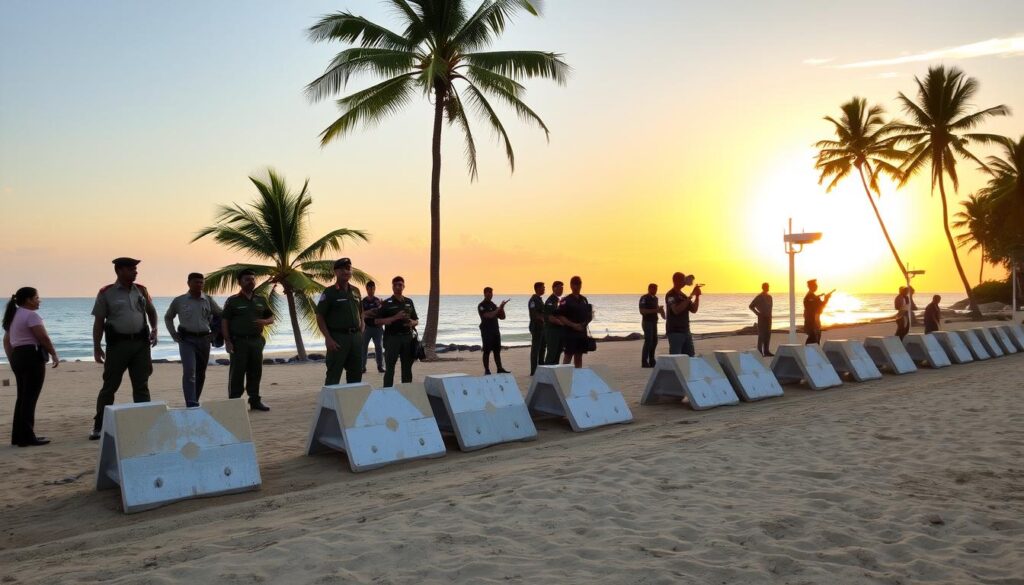
The Sri Lankan government upped its security, focusing on places tourists like to go. Right after catching the suspects, they boosted safety. They set up a hotline for people to report anything odd. This helped keep everyone safer.

They also worked more with other countries’ spies to check on the suspects. This careful watch shows they’re serious about stopping revenge attacks. These could be because of what Israel does in the area.

Keeping people safe and peaceful is very important. After stopping this terrorist plot, Sri Lanka kept its strong security. This shows Sri Lanka’s strong stand against terrorism. They want to keep the country safe from outside dangers.

It’s important to see how these actions affect the world. It affects not just Sri Lanka, but also how countries work together and stay stable. To see more about how Sri Lanka balances safety and culture, look at this article about traditional handicrafts in Sri. It shows how they keep their culture alive while staying safe.

Event Details
Initial intelligence report Indicated a potential terrorist threat targeting Israeli tourists in Sri Lanka
Suspects’ ties Linked to international groups, notably in Iraq
Security measures implemented Security heightened in tourist regions, emergency hotline established
Objective Preempt reprisals tied to geopolitical tensions, maintain regional stability

Sri Lanka stays vigilant and keeps its security tough to prevent threats. As things change, they keep checking and updating safety. This protects everyone in the region, including visitors from other countries.

Understanding the Broader Impact of the Arrests

The recent capture of suspects threatening Israeli tourists in Arugam Bay has affected many areas. Sri Lankan police worked with global teams, highlighting the need for quick action and intelligence to keep peace and protect tourism, including places like the Jewish community center and Chabad House. These events are part of bigger, world-wide concerns over terror-linked actions.

In Europe, extremist attacks have big impacts. The attack on Moscow’s Crocus concert hall was very harmful. Now, as Europe faces events like the Paris Olympics, it reacts by increasing security efforts, learning from past events. We’re reminded how critical safe international relations are, as seen in Sri Lanka and Pakistan’s efforts to boost air travel for tourism and growth.

Sri Lanka is also focusing on education as a path to stability, with a huge budget for 2024. By spending Rs. 465 billion, they aim to improve their educational structure. This move shows Sri Lanka’s commitment against extremism and for economic strength. Through promoting education for all, Sri Lanka is fighting threats and pushing for progress. Education helps build a society that can stand against outside dangers effectively.

Security Heightened in Arugam Bay Amid Terror Threats

Security Heightened in Arugam Bay Amid Terror Threats

After receiving warnings from the US Embassy, Arugam Bay Security Measures have been significantly increased. This is to address a terror threat detected in the area. Authorities are now strictly enhancing Arugam Bay Safety Alerts. They are focusing on tourist spots, including Chabad houses, where security precautions have notably risen.

Security Heightened in Arugam Bay Amid Potential Terror Threats

Travel advisories from the US and Israel led to quick action. Security has been tightened around key areas, like places of worship and markets. These areas often see international visitors, especially from Israel. The Sri Lankan Police have stepped up their surveillance and coordination. This provides additional protection, reflecting the large number of Israeli tourists.

A good portion of tourists come from Israel. This makes the recent threats even more concerning for Sri Lanka’s tourism. But, it’s crucial to keep all visitors and residents safe. This proactive approach mirrors the increased security across Sri Lankan tourist destinations. It aims to protect the well-being of the approximately 1.5 million tourists who visit the island each year.

Understanding the Terrorist Threats in Arugam Bay

Arugam Bay has been on high alert due to possible terror threats. These threats target popular tourist spots. Local and international security forces are working together to keep everyone safe. They aim to protect tourism and the area’s stability.

Background of the Recent Security Alerts

The U.S. and Israel have reported serious terror threats in Arugam Bay. This comes after the U.S. Embassy and Israel’s National Security Council issued warnings. Israelis were told to leave Arugam Bay quickly because of a Sri Lanka terrorism alert. These alerts came after the Easter 2019 attacks, which changed national security.

Profile of the Arugam Bay Region and Potential Targets

Arugam Bay is known worldwide for its surfing. Now, ensuring Arugam Bay tourism safety is critical. Places like the Chabad House are being closely watched. This shows the challenge of welcoming tourists while keeping them safe. It highlights Arugam Bay terrorism concerns.

About 500 police officers are now in Arugam Bay and nearby Pottuvil. They are there because of potential terror threats. Their job is to prevent anything bad from happening. This is vital to keep Arugam Bay a safe place for visitors.

Assessment of the Terror Threat Level in Sri Lanka

Terror Threat Level Assessment Arugam Bay

The situation is not just in Arugam Bay but all over Sri Lanka. There’s now a hotline (number 1997) for tourists to report any weird activities. This response is part of the wider effort to keep the country stable. It connects to larger issues like education challenges.

Looking closely at threats helps protect areas where many Israelis and Western tourists go. Authorities are watching everything closely. They are worried about the political situation escalating. This has led to increased security to make sure tourists and locals are safe.

Despite the concerns, Arugam Bay is still a beautiful place for surfers and travelers. However, the threat of Arugam Bay Terrorism Concerns affects how security is managed. The goal is to keep being strong, even when facing big challenges.

Heightened Security Measures in Arugam Bay Amid Potential Terror Threats

Due to growing security worries, Arugam Bay emergency response measures and Sri Lanka police vigilance have been stepped up. These actions are crucial for protecting tourists and locals from threats.

Local Law Enforcement and Emergency Response Initiatives

In Arugam Bay, the local security plan is strong, with more police and Special Task Force members around. They’ve set up roadblocks and do random checks. This is all part of a bigger Arugam Bay counterterrorism effort. There’s also a special hotline, 1997, for tourists to report anything suspicious.

International Intelligence Cooperation and Threat Prevention

Sri Lanka’sforces are working with international teams, including those from Israel and India. This is key in the international cooperation on Arugam Bay threats. By working together, they aim to stop terrorist attacks and make the area safe for the long term. This effort helps keep Arugam Bay stable and secure.

Safety and Security Measures for Tourists and Local Residents

To protect Arugam Baylocals and tourists, people are urged to be cautious. They should hide nationality signs, avoid big crowds, and follow security advice. Tourism businesses have also been taught about emergency steps to improve safety.

Thanks to these in-depth security plans, includinginternational insights and local police work, everyone’s safety in Arugam Bay is a top concern. This strategy deals with current dangers and builds a safe, stable future for the area.

Conclusion

Sri Lanka’s officials quickly reacted to the growing security challenges. They sent about 500 cops and Special Task Force units to Arugam Bay and Pottuvil. After Israel’s National Security Council raised the threat level to four, it advised its people to be very careful or move to safer places, like Colombo. These actions show how fast the local and international teams worked to make Arugam Bay safe.

International tourists, including those from Israel, Russia, the US, and Britain, now have to think about the Arugam Bay Travel Advisory Impact. The tourist hotline shows the government’s effort to keep everyone safe. But, travel warnings might slow down the much-needed economic boost. This is seen in the analysis of Sri Lanka’s tourism comeback at this link, pointing out the important next few months for Arugam Bay’s financial health.

Arugam Bay’s future as a top spot for tourists, especially surfers, is uncertain. Yet, the Commonwealth Union Ltd. and Appé Lanka Foundation are deeply investing in the community’s well-being, including in the Poonakary region, at this link. We’ll have to wait to see how this crisis affects Sri Lanka’s charm and its competition with places like the Maldives for European tourists.

Sri Lanka’s Healthcare on Verge of Collapse in Economic Crisis

Sri Lanka’s Healthcare on Verge of Collapse in Economic Crisis

Sri Lanka is facing a severe economic crisis. This has led to a major healthcare system crisis. Most of the country’s medical supplies are imported, making up about 85%. Now, these supplies are critically low.

The lack of essential drugs like atracurium and fentanyl is alarming. Some critical antibiotics are also “out of stock.” Hospitals are urgently calling for life-saving drugs and equipment. Due to this shortage, non-essential surgeries have been stopped. There’s a cry for help to get overseas donations of antibiotics and ET tubes for newborns.

The impact of the economic crisis on healthcare is severe. Healthcare workers are facing salary cuts and less overtime pay. The cost of living is going up too. This makes it hard for staff and patients to get the healthcare they need. Without quick help, Sri Lanka’s healthcare system might collapse. This crisis is affecting the entire nation deeply.

Sri Lanka’s Healthcare on Verge of Collapse in Economic Crisis

In the midst of tough times, Sri Lanka faces big challenges with its healthcare system. Conditions keep getting worse. A huge inflation rate of 73 percent in late 2022 made healthcare worse. Essential medical items are missing, and many healthcare workers are leaving for better jobs abroad.

The healthcare situation in Sri Lanka is getting critical. Over the last two years, about 1,700 doctors have left. This is almost 10% of all healthcare workers on the island. This loss affects hospitals everywhere. For example, the District General Hospital in Embilipitiya had to stop emergency surgeries when two anaesthesiologists left. Also, the paediatric ward at the Anuradhapura Teaching Hospital closed temporarily after losing all its paediatricians.

Money problems make the crisis worse. The Health Minister, Ramesh Pathirana, was warned by the Government Medical Officers’ Association. They said nearly 100 rural hospitals might shut down because healthcare workers are leaving. Hospitals are not just losing staff. They also lack over 90 basic medicines.

Even though USD 114 million was set aside for medicine, only USD 68.5 million was spent on buying them. Also, 80% of drugs from an Indian credit line were unregistered and untested in Sri Lanka. This raises concerns about patient safety and trust in healthcare.

The salary difference for doctors is also a big problem. In Sri Lanka, a middle-grade doctor makes about $508 a month. That’s much less than the $3,800 they could earn in the UK. This pay gap is why more doctors are moving to countries like the UK. A doctor could even pay off a big loan in a year after moving.

The OMP Sri Lanka highlights these serious challenges facing Sri Lanka’s healthcare system. It’s crucial for both local and global support to step up. This will help prevent a total collapse of the system, keep essential health services going, and stabilize healthcare in Sri Lanka.

Supply Shortages Deepening the Healthcare Crisis

Sri Lanka’s healthcare is in crisis due to a lack of medical supplies and essential drugs. The economy’s struggle, marked by a 70% inflation rate and a falling currency, has hit healthcare hard. Hospitals now use supplies from months ago, risking a complete system failure.

Severely Depleted Medical Supplies and Essential Drugs

The shortage of medicines is serious. Sri Lanka relies on imports for about 90% of its essential medicines, mainly from nearby countries. Now, even basic items like antibiotics and painkillers are hard to find. Some pharmacies can’t fill over 30% of their orders, affecting patient care deeply.

Reliance on International Aid and Donations

Sri Lanka’s healthcare leans heavily on international help because of the economy. Aid and donations from Sri Lankans abroad and global groups are crucial. They provide much-needed medical supplies and financial support to keep healthcare running.

Impact of Supply Shortages on Life-Saving Treatments

The shortage also affects life-saving treatments. Many surgeries are delayed or canceled because supplies are too low. This situation not only limits access to healthcare but increases the risk of deaths for those needing urgent care.

A closer look at the crisis reveals that inflation hit 70% in 2022. This made things even harder for the healthcare system. Learn more here.

Medicine/Supply Type Availability Before Crisis (%) Current Availability (%)
General Medicines 80 40
Painkillers 75 25
Antibiotics 70 20
Surgical Supplies 85 30

Sri Lanka’s healthcare crisis shows the urgent need for help and the ongoing strain on a once-strong system. The current economic troubles challenge the sector’s strength, highlighting the need for sustainable solutions and help from outside.

Widespread Economic Hardship Affecting Healthcare Accessibility

Sri Lanka’s healthcare struggles under economic pressure are huge. Proposed funds include $50 million for healthcare improvements and $100 million in loans. This is to help in these challenging times. As the economy falls, the need for improved healthcare grows. The swift drop in stability stresses the healthcare support needs.

A project aims to boost Primary Healthcare (PHC) with a $150 million budget by 2028. It plans to enhance services with an extra $90 million. Plus, $50 million will improve the quality of care. The focus is on better services and care at healthcare centers.

Since 2009, Sri Lanka grew economically post-civil war. But recent financial troubles have increased poverty and hurt sectors like agriculture. Over 5.7 million people, or 26% of Sri Lankans, now need aid. This crisis has worsened food security, leading to health risks. The fall in the economy makes getting to medical facilities hard for many.

The UNFPA calls for funds to keep providing key health services. They need $10.7 million to help over 2 million women and girls. This effort shows the severe health challenges faced.

UNFPA’s support is crucial, with plans to assist 145,000 pregnant women. They will also give health supplies to 1.2 million people. Aid includes support for 37,000 women, help for rape survivors, and menstrual hygiene aids. Yet, these initiatives are up against a major economic downturn. A UN plan needs $47 million to help 1.7 million Sri Lankans until September 2022. Sri Lanka also faces a critical paper shortage, affecting students and threatening healthcare facilities. The government and global partners are working hard to tackle these issues. A crisis in education hints at larger healthcare.